

The Shadow of Cheap Labor: How the Global Logistics Boom Conceals a Human Supply Chain Crisis
- theconvergencys
- Nov 9, 2025
- 3 min read

By Michael King Jul. 8, 2025
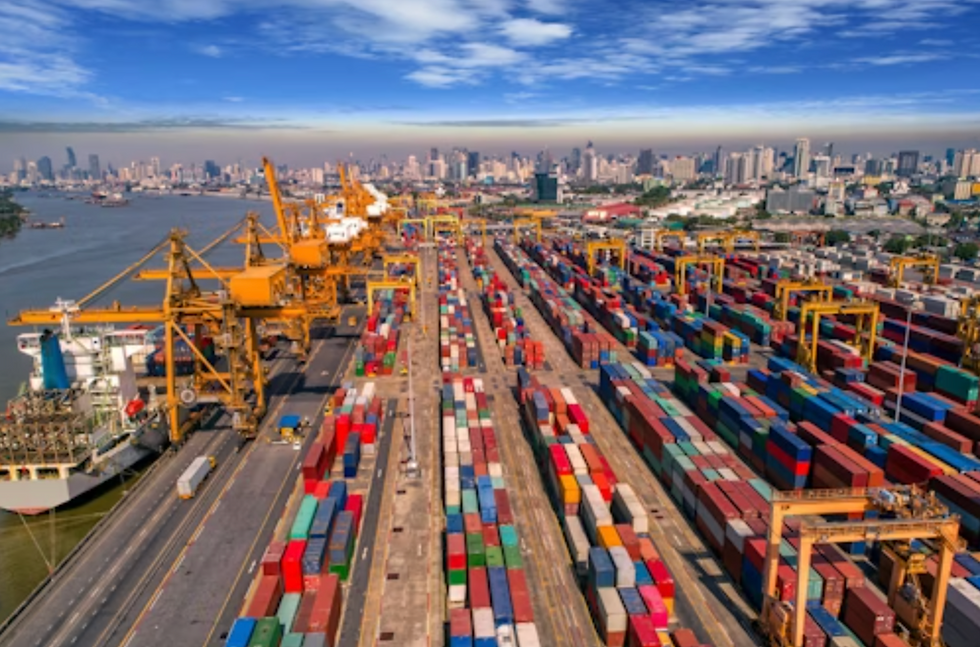
The post-pandemic supply chain rebound has been hailed as a triumph of resilience. Container throughput at global ports hit a record 866 million TEUs in 2024, and e-commerce logistics generated over US$9.3 trillion in total transaction value. Yet the miracle of restored flow hides a structural dependence on underpaid, hyper-flexible labor. Across ports, fulfillment centers, and last-mile delivery platforms, the global logistics boom has created a workforce that is both essential and disposable. In economic terms, efficiency has become a euphemism for exhaustion.
The Hidden Cost of Speed
Global shipping turnaround times have dropped from an average of 3.4 days in 2021 to 1.9 days in 2024, according to Drewry Maritime Data. But this speed has been achieved not through automation alone, but through the expansion of precarious employment. In China’s coastal logistics hubs, 63% of port laborers are now employed on rolling short-term contracts, while in Europe, “flex labor” agencies supply over 40% of dockside workers.
This casualization extends to the warehouses that power digital commerce. Amazon, JD.com, and Flipkart together employ over 2.1 million warehouse staff globally—of whom 68% are classified as temporary or gig workers. Median real wages for warehouse associates in the U.S. rose only 3.2% between 2020 and 2024, even as corporate profits increased 41%. The arithmetic of efficiency is simple: human fatigue subsidizes corporate speed.
Algorithmic Management and the Erosion of Dignity
In modern logistics, algorithms function as foremen. Workers’ movements are tracked in real time through wearable sensors and productivity dashboards. A Cornell ILR School (2024) study on “algorithmic management” in fulfillment centers found that each picker’s actions were monitored every 3.5 seconds, with “idle time” automatically deducted from performance scores. Such precision produces not discipline, but dehumanization.
In India’s gig logistics sector, riders for companies like Zepto and Swiggy Instamart report average workdays exceeding 12 hours, earning the equivalent of US$0.72 per delivery. When fuel prices surged in 2023, algorithms did not adjust base rates; instead, workers bore the shock. Automation, intended as neutrality, has become a mechanism for shifting volatility onto labor.
The Political Economy of Invisible Work
Governments celebrate the logistics sector as a driver of GDP, yet rarely regulate its labor dynamics. The World Bank’s 2024 Logistics Performance Index (LPI) ranks nations by efficiency metrics—customs clearance times, shipment cost, tracking accuracy—but contains no labor indicators. By this omission, human welfare is rendered invisible within the metrics of movement.
Even digital supply chains reproduce physical inequalities. A 2023 ILO report estimates that 164 million workers globally are employed in logistics-related digital services—warehouse operations, ride-hailing, dispatching—and 74% lack formal contracts. The rise of “just-in-time” commerce has produced a “just-in-case” workforce: millions of workers perpetually available, rarely protected.
Externalizing Human Risk
For multinational corporations, flexible logistics labor acts as an insurance policy against disruption. During the 2023 Suez Canal backlog, Amazon offset lost maritime throughput by ramping up air-freight shifts, employing 15,000 additional night workers across the U.S. and EU. None received hazard premiums. This elasticity is the hidden counterpart to resilience: the ability to stretch human labor as if it were capital.
The moral arithmetic mirrors the environmental paradox of global shipping—outsourcing pollution through flags of convenience, now paralleled by outsourcing responsibility through employment intermediaries. The same container that carries goods across the world carries hidden debt in human exhaustion.
Toward a Fair Supply Chain Future
Rebalancing the logistics economy requires embedding labor equity into efficiency metrics. The European Commission’s 2025 Sustainable Logistics Directive—which mandates labor disclosure in shipping ESG reports—is a first step. Governments should classify fulfillment centers and gig platforms as “critical infrastructure”, binding them to international labor standards under the ILO Decent Work Convention.
Technology must also shift from surveillance to support: algorithms that track injury risk, automate rest scheduling, or equalize wages across shifts can turn digital oversight into human protection. The global supply chain need not remain a chain on workers themselves.
Efficiency should no longer mean “at any human cost.” The resilience of globalization will depend not on how fast goods move, but on how justly the people moving them live.
Works Cited
“Maritime and Port Statistics 2024.” Drewry Shipping Consultants, 2024. https://www.drewry.co.uk
“Logistics Performance Index 2024.” World Bank Group, 2024. https://www.worldbank.org/lpi
“Global Warehouse Employment Analysis.” International Labour Organization (ILO), 2023. https://ilo.org
“Algorithmic Management in Logistics.” Cornell University ILR School, 2024. https://ilr.cornell.edu
“Global Fulfillment Center Report.” PwC Supply Chain Analytics, 2024. https://pwc.com
“Gig Economy Wage Data.” Centre for Policy Research, India, 2024. https://cprindia.org
“Sustainable Logistics Directive.” European Commission, 2025. https://ec.europa.eu
“Decent Work and the Gig Economy.” ILO Decent Work Programme, 2024. https://ilo.org
“Digital Commerce Labor Statistics.” OECD Digital Economy Outlook, 2024. https://oecd.org
“Warehouse Surveillance Study.” MIT Work of the Future Initiative, 2023. https://workofthefuture.mit.edu


Comments